Runtime engineering
C1/C2, inlining, escape analysis, deoptimisation, safepoints and generated-code verification.
Principal JVM Performance Engineer
I help engineering teams work through high p99 latency, latency regressions, throughput ceilings, memory pressure, GC pauses, lock contention and rising infrastructure cost — in JVM runtimes, low-latency concurrency and financial systems. Every engagement starts with profiling and measurement, not assumptions.
Selected work
Sanitised examples built around problem, evidence, design and result. No confidential internals and no miraculous benchmark folklore.
Parallel execution, allocation control and a 75% reduction in memory use.
Lock-free, near zero-allocation infrastructure for a high-volume platform.
In-memory computation reduced processing time and infrastructure expenditure.
Engineering domains
The fastest code is rarely produced by staring harder at a service method. Architecture, ownership, allocation and hardware behaviour have an irritating habit of mattering.
C1/C2, inlining, escape analysis, deoptimisation, safepoints and generated-code verification.
VarHandles, acquire/release, SPSC/MPSC structures, lock contention and cache coherence.
Allocation elimination, FFM, MemorySegment, fixed layouts and deterministic lifetimes.
Linux perf, NUMA, CPU affinity, ARM/x86, UDP, QUIC, shared memory and Rust.
Why Performance Lab exists
Modern software is often discussed in terms of frameworks, languages, and architectural patterns. Those are important, but they rarely explain why software becomes fast, slow, scalable, or unpredictable in production.
The behaviour of a running system emerges from the interaction between CPUs, memory hierarchies, operating systems, runtimes, compilers, networking, and application architecture. Understanding only one of these layers is rarely enough to solve real performance problems.
Performance Lab was created to bridge that gap. Its purpose is not to collect isolated micro-optimizations or benchmark screenshots. Instead, it aims to explain how modern software actually executes, using interactive laboratories, reproducible experiments, source code, and measurable evidence.
Every laboratory is built around the same principles:
Explain the underlying mechanism before presenting an optimization.
Distinguish conceptual models from measured behaviour.
Provide reproducible benchmarks rather than impressive numbers.
Discuss trade-offs instead of universal rules.
Encourage experimentation rather than memorization.
Whether the topic is CPU caches, memory ordering, lock-free algorithms, JVM internals, Rust ownership, or low-latency networking, the objective remains the same:
Build intuition first.
Optimize second.
Measure always.
Performance engineering is not about making code clever. It is about understanding how software behaves under real workloads, making informed engineering decisions, and building systems that remain predictable as they evolve.
Interactive learning
Small, interactive models for concepts that are usually explained in prose alone. Every card below is a complete, stable reference laboratory — not a preview.
L1/L2/L3/RAM, spatial and temporal locality, and hardware prefetching.
Step through invalidation traffic as two cores write to one cache line.
Reservation, publication, wrap-around, and two concrete correctness bugs.
Owned partitions vs. a shared worker pool, cross-core handoff, and backpressure.
Browse all 7 labs in the Performance Lab catalogue → — including Cache Coherence and MESI, Memory Ordering, and CAS Contention and Backoff.
An early, non-reference prototype exploring the JIT compilation pipeline is also still up at /lab/#jit-pipeline — it predates the interactive framework above and isn't held to the same bar; a full reference lab for it hasn't shipped yet.
Guided curriculum
A structured route from measurement fundamentals to runtime architecture — depth over a fixed curriculum, not a shortcut to a title.
About the author
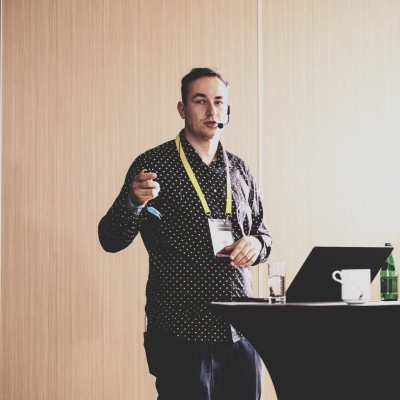
Performance Engineer
I'm a Performance Engineer focused on runtime systems, low-latency software, and distributed architectures — JVM internals, memory management, concurrency, and more recently, the same approach carried into Rust.
Performance Lab is my long-term research and education project: interactive laboratories, reproducible experiments, and the reasoning kept next to the code.
Read the full about page → for the project's philosophy, roadmap, and how it's built in public.